DESIGNING WITH FARMERS, NOT JUST FOR THEM
This blog explores the importance of designing agricultural solutions with farmers rather than simply for them. It highlights the gap between innovation and the everyday realities farmers face, emphasizing the need for deeper inclusion, practical collaboration, and shared decision-making. The piece advocates for a more participatory approach that values farmers as co-creators of sustainable agricultural transformation.
THOUGHT LEADERSHIP
Across the agricultural sector, there is growing momentum around innovation, climate-smart practices, digital tools, and new approaches aimed at improving productivity and resilience.
These efforts are important. But a closer look at implementation reveals a recurring challenge: many solutions struggle to fully align with the everyday realities of farmers.
Where the Disconnect Begins
In many farming communities, access to information has improved. Farmers are increasingly exposed to weather updates, new techniques, and development programmes.
Yet access does not always translate into action. A farmer may receive seasonal forecasts but lack the resources to adjust planting decisions. They may be trained in improved practices but face barriers in sustaining them. They may be engaged in programmes but have limited influence over how those programmes are designed.
These experiences point to a deeper issue, a gap between intention and lived reality.
Rethinking Inclusion
Efforts to involve farmers are increasing, but inclusion is often framed around participation, being present, attending, or receiving.
A more effective approach goes further.
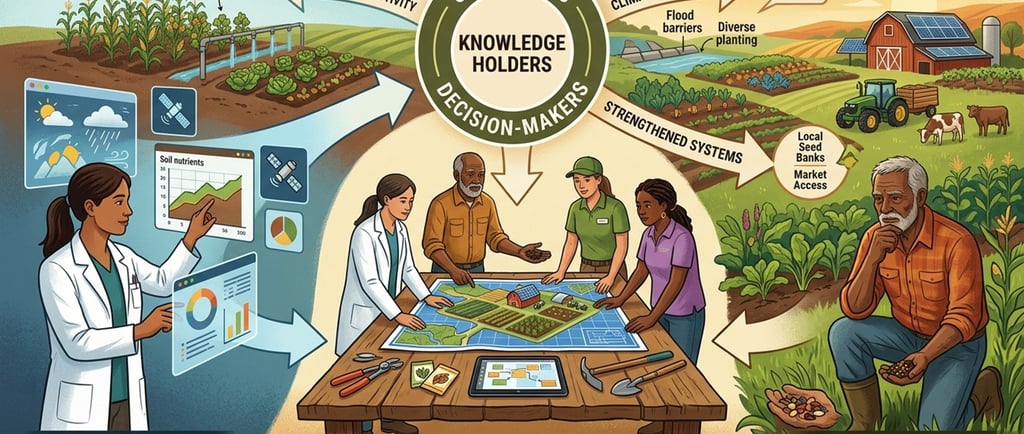
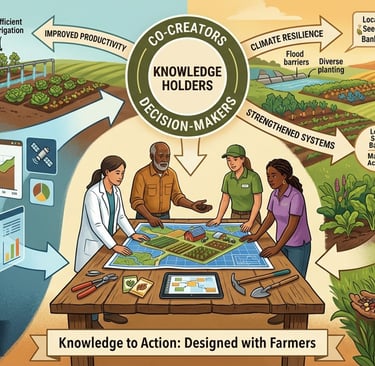
It considers farmers as:
Knowledge holders
Decision-makers
Co-creators of solutions
Designing with farmers means understanding not just what challenges exist, but how they are experienced—and what solutions are realistic within those contexts.
Connecting Knowledge to Action
At the intersection of research, climate change, and agriculture, one of the most critical challenges is ensuring that knowledge leads to action.
This requires:
Translating information into practical, usable guidance
Aligning innovations with local capacities and constraints
Strengthening the systems that enable farmers to act on what they know
Without this connection, even the most promising innovations risk limited impact.
Moving Forward
Improving agricultural outcomes is not solely about introducing new ideas—it is about ensuring those ideas work in practice.
This calls for:
Earlier and deeper engagement with farmers
Continuous feedback and adaptation
Stronger integration of local and scientific knowledge
Reflection
As the sector continues to evolve, one question remains central:
What would agricultural innovation look like if farmers were consistently involved not just in implementation, but in shaping the agenda itself?